

Venous leg ulcers are long-lasting, non-healing wounds on the lower legs caused by impaired venous blood circulation. They most commonly develop in people with chronic venous insufficiency or long-standing untreated varicose veins. Venous ulcers usually form because the valves in the veins are damaged and blood does not flow properly back to the heart. As a result, pressure increases in the legs, leading to swelling, skin changes, and eventually ulcer formation.
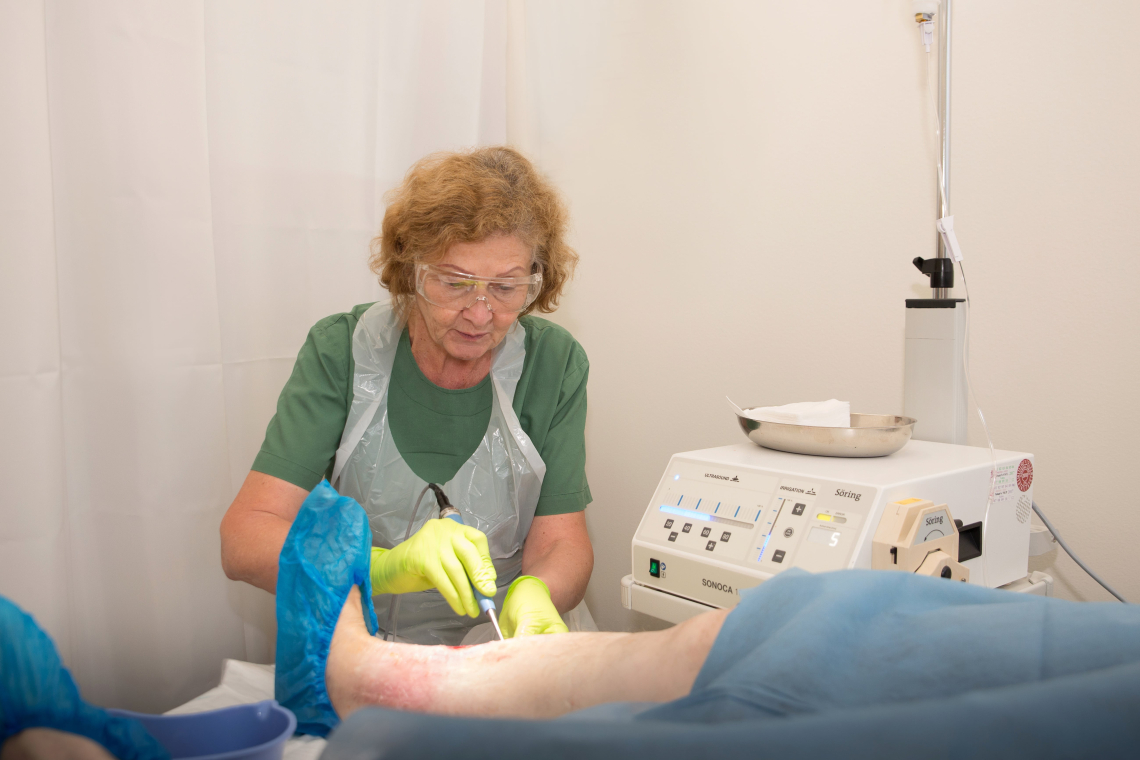
Ulcers most often appear on the lower part of the leg, especially above the ankle (on the inner side), presenting as a moist, painful or sometimes painless wound, with redness, swelling, and skin pigmentation around it.
persistent leg swelling;
a feeling of heaviness in the legs;
darker skin discoloration (brownish pigmentation);
itching or thickened skin;
a wound that does not heal for several weeks.
As the most severe manifestation of chronic venous insufficiency, venous leg ulcers are often painful, exudative, restrict mobility, and may lead to social isolation. They reduce quality of life and affect approximately 1–5% of the population.
Ulcers may also be ischemic in origin (caused by arterial atherosclerotic blockage) and are localized on the lower legs.
Trophic ulcers (chronic wounds) can vary, and their causes may differ widely. The most common types are divided into three main groups: venous, arterial, and neuropathic.
The first step in treating trophic ulcers is a mandatory consultation with a vascular surgeon or phlebologist, followed by treatment according to the specialist’s recommendations.
For wound cleansing and treatment, the “Baltic Vein Clinic” uses the most advanced technologies, such as the MULTILINE™ laser platform with RecoSMA® technology and ultrasound technology from the German company “Söring.” This method is based on low-frequency ultrasound waves delivered into the wound with saline solution, simultaneously cleansing and promoting healing.
The technology includes three types of tips, allowing very thorough cleaning of various types of wounds (pressure sores, burns, diabetic foot ulcers, complicated and non-healing postoperative wounds, etc.), separating necrotic tissue and cleaning wound “pockets.” Procedures can be performed on an outpatient basis using local anesthesia.
the method is selective and provides immediate effect;
it is less traumatic and more gentle;
fewer cleansing procedures are needed compared to other methods;
it promotes ulcer healing by improving oxygen supply to tissues and facilitating microbial destruction.
In cases of ulcers, precise diagnostics are essential, including consultation with a vascular surgeon (angiosurgeon).
compression therapy with short-stretch compression bandages;
wearing compression stockings (special ulcer stockings);
medication therapy;
wound cleansing and treatment using ultrasound.
Dr. Matīss Vecumnieks, surgeon at “Veselības centrs 4” (specializing in the treatment of non-healing wounds and trophic ulcers)
“Every minor skin injury can become a serious health problem if not treated in time,” emphasizes Dr. Matīss Vecumnieks. Non-healing wounds and trophic ulcers are among the most serious complications of chronic diseases. They not only cause pain and discomfort but may also signal serious underlying problems such as impaired circulation, diabetes, or infection. In Latvia, an increasing number of people—especially elderly patients—are affected by these issues.
Normally, a wound heals within 1–2 weeks. If it does not heal within four to six weeks, this may indicate a trophic ulcer or other serious disorders. Such wounds often appear on the legs—around the ankles, feet, or lower legs—and signal that tissues are not receiving enough oxygen and nutrients.
“Trophic ulcers are not just an aesthetic problem—they can be life-threatening if left untreated,” notes the surgeon.
The first step is to visit your family doctor. The doctor will assess the situation and, if necessary, refer you to a specialist:
a vascular surgeon/phlebologist if venous or arterial insufficiency is suspected;
an endocrinologist if the problem is related to diabetes;
a dermatologist if the damage affects the skin and is infectious;
a surgeon specializing in long-term non-healing wounds and trophic ulcers;
a wound care specialist if regular professional wound care is required.
Treatment of trophic ulcers is комплекс and includes local therapy, medication, and often compression therapy, especially for venous ulcers. Successful treatment of chronic wounds and ulcers also requires thorough removal of necrotic (dead) tissue and microbial biofilm that delay healing.
In modern medical institutions, this is performed using the latest ulcer-cleansing technology, where the wound is cleaned with low-frequency ultrasound waves using saline solution. This method reduces the number of necessary procedures. It provides greater access to care for rural residents who may not be able to travel frequently to large cities for highly qualified medical services due to financial reasons.
moisture-retentive dressings and hydrogels to prevent infection and maintain optimal moisture;
vacuum therapy (NPWT), which promotes circulation and removes exudate;
laser therapy and phototherapy to reduce inflammation;
biological therapies such as growth factors and stem cell preparations;
compression therapy, particularly important in venous insufficiency.
Combining these methods, together with proper nutrition and control of the underlying disease, significantly improves healing and prevents recurrence. “Veselības centrs 4” operates a wound care office where patients receive comprehensive diagnostics, treatment, and long-term follow-up. The specialists at “Veselības centrs 4” are among the most experienced in this field.
To prevent trophic ulcers:
regularly monitor blood sugar levels if you have diabetes;
take care of your leg veins—avoid prolonged standing or sitting, use compression stockings;
wear comfortable, breathable footwear;
do not ignore even minor wounds, especially on the feet and ankles;
visit a vascular specialist preventively if you experience swelling, heaviness, or fatigue in the legs.
“The earlier a patient consults a doctor, the greater the chance of preserving health and avoiding serious consequences,” emphasizes surgeon Matīss Vecumnieks. “Chronic wounds should not be accepted as a ‘feature of aging.’ They are treatable—with the right approach, patience, and professional care.”
What is a trophic ulcer and why does it occur?
A trophic ulcer is a chronic wound, most often located on the lower part of the leg, caused by long-term venous insufficiency. Impaired blood circulation leads to tissue damage that does not heal without appropriate treatment. It is often associated with varicose veins.
Can a trophic ulcer heal on its own?
Without treatment, a trophic ulcer rarely heals and often increases in size. A comprehensive approach is required — treatment of venous insufficiency, wound care, and compression therapy. The earlier treatment is started, the better the result.
How are trophic ulcers treated at the Baltic Vein Clinic?
Treatment first involves eliminating venous insufficiency using EVLA, VenaSeal, or other methods, as well as regular wound care with modern dressing materials. The doctor develops an individual treatment plan for each patient.
How long does it take to treat a trophic ulcer?
The duration of treatment depends on the size, depth, and underlying cause of the ulcer. For small ulcers, 4–8 weeks may be sufficient, while more complex cases may require several months. After vein treatment, healing accelerates significantly.
What symptoms indicate that a trophic ulcer is becoming dangerous?
A doctor should be consulted immediately if the ulcer increases in size, severe pain appears, or redness or pus develops — these may indicate an infection. Long-term untreated ulcers increase the risk of sepsis.
SIA "Veselības centrs 4" is one of the largest private multi-profile outpatient medical companies in Latvia with 30 years of experience and technologically advanced equipment. The main areas of operation include diverse diagnostics, full-spectrum treatment, modern rehabilitation, and a new concept of preventive and aesthetic medicine.